



You blot at noon, skip moisturizer to stay matte, and by three o'clock your face is shinier than it was at breakfast. If that loop sounds familiar, the issue probably is not that you are moisturizing too much. It may be that you are barely moisturizing at all.
Learning how to hydrate oily skin means separating two things most people treat as one: oil and water. Your skin can have plenty of the first and not nearly enough of the second. Get the water part right and the oil part often becomes far less dramatic.
How to Hydrate Oily Skin: The Short Answer
To hydrate oily skin, use a gentle cleanser, apply a water-binding humectant like hyaluronic acid to damp skin, then seal it with a lightweight, oil-free gel moisturizer. Skipping moisturizer to control shine tends to backfire. The goal is water-based hydration in a texture that never feels heavy.
Why Oily Skin Still Needs Hydration
Oil and water do different jobs. Sebum is the oil your skin produces to keep the surface lubricated and help limit water loss. Hydration is the water content held inside the upper layers of your skin. You can produce plenty of sebum and still be low on water.
That is why the shiniest faces are often the ones that feel tight underneath. Shine is a surface reading. It tells you very little about what is happening a few layers down.
Can Oily Skin Be Dehydrated?
Yes, and it is common. Dehydrated skin is a temporary condition marked by a lack of water, and it can affect any skin type, including very oily ones. Dry skin is a skin type that lacks oil. The two get used interchangeably, but they call for different fixes.
Signs you are dealing with dehydrated oily skin: your face looks shiny but feels tight, makeup clings to flaky patches over an oily base, and fine lines look more noticeable by evening than they did in the morning.
What Does the Skin Barrier Have to Do With Oil Production?
Your skin barrier is the outermost layer of your skin, a mix of cells and lipids that holds water in and helps keep irritants out. When it is intact, water evaporates slowly. When it is compromised by over-cleansing, over-exfoliating, or harsh actives, water escapes faster through a process called transepidermal water loss.
Here is where the shine cycle can start. Strip your skin, and it may look and feel oilier — not necessarily because more oil is being produced, but because damaged, dehydrated skin holds onto sebum differently, and any oil that's there stands out more against the tightness and irritation. Feeling greasy, you cleanse harder, which strips the barrier further and repeats the cycle. It is a loop many oily skin types stay stuck in for years.
Breaking that loop is the real answer to how to hydrate oily skin. Support the barrier, and your skin has less reason to look and feel out of balance.
What Ingredients Help Hydrate Oily Skin?
Not every hydrator suits oil-prone skin. These three do the work without the weight.
Hyaluronic Acid
A humectant that draws water into the upper layers of skin, hyaluronic acid replenishes and helps improve moisture retention. It delivers water rather than oil, which makes it a natural fit when you want hydration without a heavier finish. One rule: apply it to damp skin and follow with a moisturizer, or in very dry air it can work against you.
Celery Seed Extract
An antioxidant-rich botanical, celery seed extract improves the appearance of pores and smooths the overall complexion. That matters for oily skin, where pores tend to look more prominent as oil and dead cells collect in them.
Peptides
Peptides are short chains of amino acids. In skincare they hydrate for visibly plumper skin and help reduce the appearance of fine lines and wrinkles. Plumper-looking skin also reads smoother, which softens the look of texture that shine tends to exaggerate.
Finding all three in one oil-free formula makes this simple. Volition's Celery Green Cream is a lightweight gel moisturizer built on celery seed extract, hyaluronic acid, and peptides. It purifies and minimizes the appearance of pores while it hydrates and visibly plumps, with no oil in the formula. It is clean, vegan, cruelty-free, gluten-free, and silicone-free.
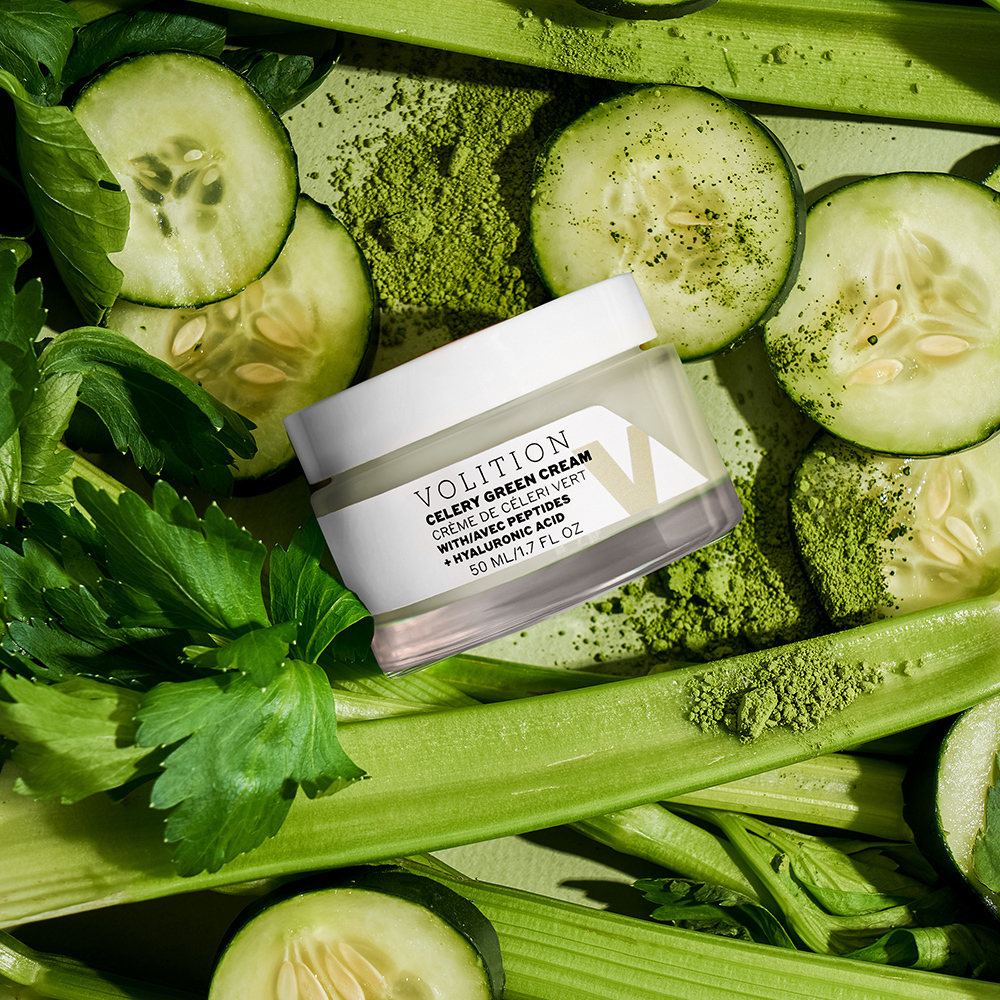
A note on fit: Celery Green Cream is formulated for normal to combination skin. If your skin sits at the very oily end of the spectrum, it can still work as your water step, but you may want a mattifying primer or a targeted oil-control treatment alongside it. Patch test anything new.
Try this: If your current moisturizer feels like a film by midday, switch to a gel texture for two weeks before you judge it. Shop the oil-free gel moisturizer.
How to Hydrate Oily Skin in Four Steps
Once you have the right ingredients, how to hydrate oily skin becomes a matter of order. Same four steps, morning and night.
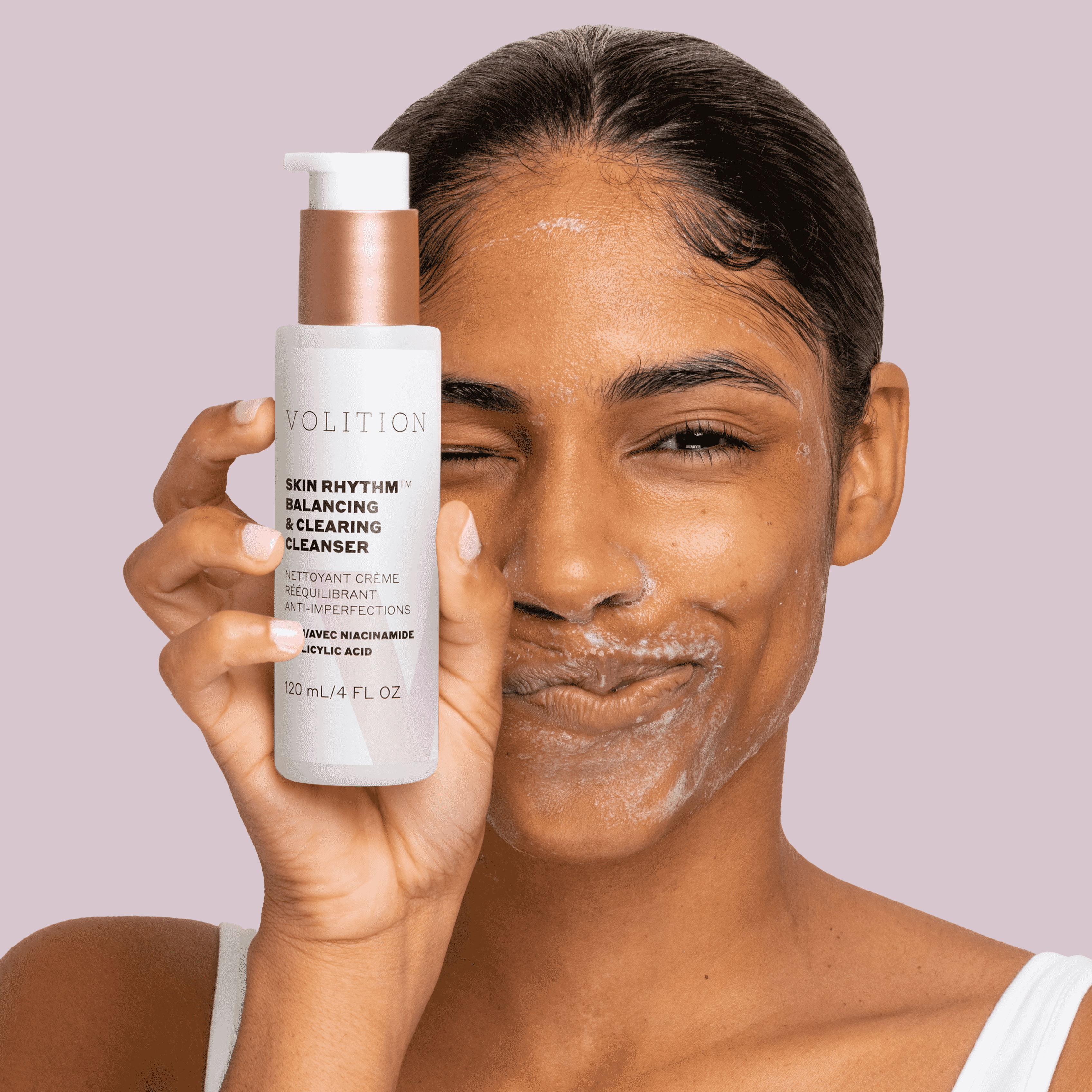
1. Cleanse without stripping. Use a gentle cleanser twice daily and lukewarm water. If your skin squeaks afterward, it is too harsh. A formula with niacinamide is a smart pick here, since it controls oil and reinforces skin barrier function. Volition's Skin Rhythm Balancing and Clearing Cleanser pairs niacinamide with salicylic acid for exactly this job.
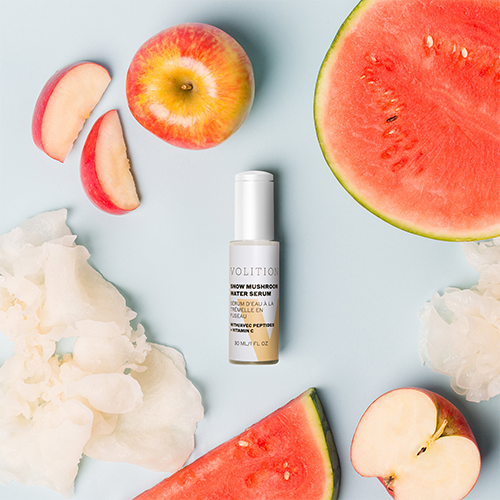
2. Add water while skin is damp. Do not dry your face completely. Press a hydrating serum onto slightly damp skin so humectants have moisture to bind. If you want the science on how hydrating ingredients pull water into skin, this breakdown of snow mushroom and hyaluronic acid covers it well.
3. Seal with an oil-free gel. This is the step most oily skin types skip. Without it, the water you just applied evaporates. A gel moisturizer locks it in without adding oil or weight.
4. Help protect during the day. Finish your morning routine with a broad spectrum SPF. UV exposure stresses the barrier you are working to support, so sun protection is part of the hydration plan, not separate from it.
Not sure which textures suit your skin? This guide to choosing the right serum breaks it down by skin type.
Gel vs. Cream vs. Lotion: Which Is Best for Oily Skin?
Texture is where most people get how to hydrate oily skin wrong. The same active ingredients can feel completely different depending on the base they are delivered in.
|
|
|
|
|
|
|
|
|
|
|
|
|
|
|
|
|
|
|
|
For oily skin, gel is almost always the right starting point. Browse the full range in the Volition skincare collection if you want to compare formats side by side.
Mistakes That Make Oily Skin Shinier
Knowing how to hydrate oily skin is half of it. The other half is not quietly undoing the work between applications.
• Washing more than twice a day. Each wash removes lipids your barrier needs.
• Using alcohol-heavy toners for an instant matte finish that leaves skin tight an hour later.
• Skipping moisturizer entirely. The single most common mistake in oily skincare.
• Stacking strong actives. Multiple acids plus a retinoid compounds barrier stress fast.
• Applying humectants to bone-dry skin without sealing them, which can pull water out of deeper layers in low humidity.
Fix those five and give it a month. Skin behavior changes slowly, but it does change.
Ready to stop fighting shine and start hydrating properly? Start with an oil-free gel moisturizer for oily and combination skin and build the four steps around it.
FAQ SECTION
Q: Should you moisturize if you have oily skin?
A: Yes. Skipping moisturizer does not reduce oil production and can leave skin dehydrated, which may prompt it to produce more. Choose a lightweight, oil-free gel formula that delivers water without adding weight.
Q: What is the best type of moisturizer for oily skin?
A: An oil-free gel or gel-cream is usually the best fit. These textures absorb quickly, layer well under SPF and makeup, and hydrate without leaving a heavy film.
Q: Can hyaluronic acid make oily skin worse?
A: No. Hyaluronic acid is a humectant, not an oil, so it adds water rather than grease. Apply it to damp skin and seal with a moisturizer so the hydration stays where you want it.
Q: How do I tell if my oily skin is dehydrated?
A: Look for shine paired with tightness, makeup clinging to flaky patches, and fine lines that look more visible by evening. Dehydrated skin lacks water, while dry skin lacks oil, and oily skin can absolutely be dehydrated.
Q: How long does it take to see a difference?
A: Most people notice their skin feels less tight within a week or two. Visible changes in shine and the appearance of pores generally take four to six weeks of consistent use. Individual results may vary.


